In 33,963 UK Biobank participants followed for a median of roughly 14 years, a proteomics-based suPAR measure was associated with adverse cardiovascular outcomes.
Population healthProteomicsNew research
Peer-reviewed longitudinal cohort · New research
Editorial contextThis study evaluated a proteomics-based measure in an observational cohort rather than an interchangeable clinical suPAR concentration.
In a 406-participant TOPCAT ancillary cohort, higher baseline suPAR was associated with cardiovascular death, cardiac arrest, or heart-failure hospitalization after adjustment for other factors.
HFpEFHeart failureClinical cohort
Peer-reviewed ancillary cohort study
Editorial contextA relatively small observational ancillary cohort cannot establish causality or support a standalone prognostic decision rule.
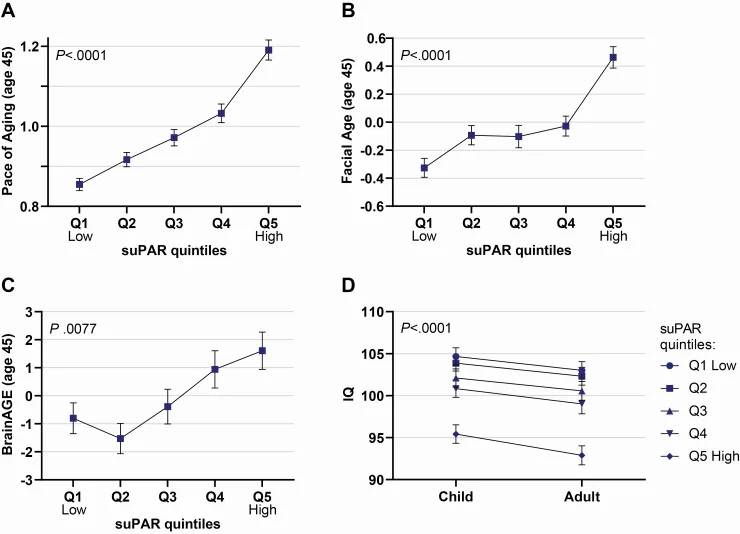
In the longitudinal Dunedin Study, elevated suPAR at midlife was associated with a faster measured pace of biological aging and differences in physical and cognitive function.
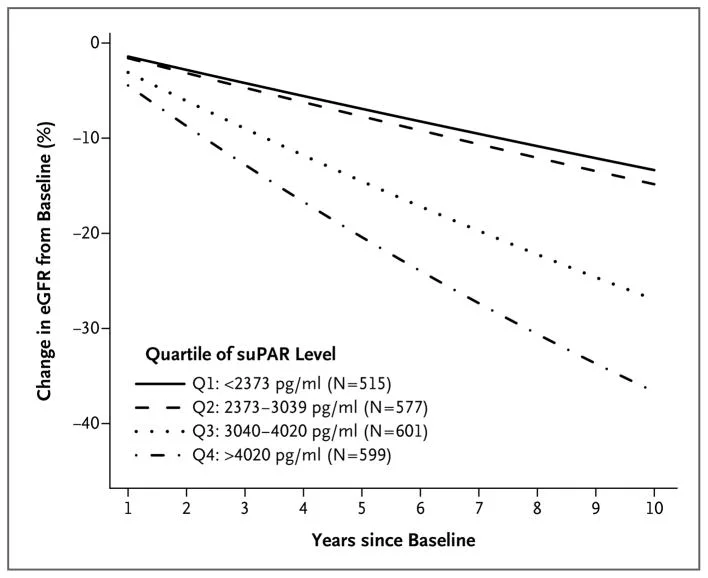
Among 25,497 acutely hospitalized medical patients, higher suPAR at emergency-department admission was associated with greater subsequent risk of chronic and acute kidney disease.
Kidney diseaseAcute medical patientsLongitudinal cohort
Peer-reviewed longitudinal clinical cohort
Editorial contextFindings from an acutely ill hospital population are observational and do not establish causality or a general clinical threshold.
In 3,225 Inter99 participants, healthier lifestyle patterns were associated with lower longitudinal suPAR levels, while higher suPAR was associated with greater all-cause mortality during follow-up.
Healthy lifestylePopulation healthMortality
Peer-reviewed longitudinal population cohort
Editorial contextObservational associations do not establish that changing suPAR levels changes mortality or other health outcomes.
In 5,347 Danish participants, lower dietary-quality scores were associated with higher suPAR, and higher suPAR was associated with greater all-cause mortality.
Diet qualityPopulation healthMortality
Peer-reviewed population cohort
Editorial contextThe observational design remains subject to residual confounding and does not establish causal relationships among diet, suPAR, and mortality.
In a cohort of 667 people with type 1 diabetes, higher suPAR was associated with cardiovascular events, kidney-function decline, and all-cause mortality.
Type 1 diabetesCardiovascular outcomesKidney function
Peer-reviewed observational cohort
Editorial contextThis disease-specific cohort does not establish causality or validate suPAR as a standalone clinical decision tool.
A study of 155 healthy adults examined analytical and biological factors that may influence circulating suPAR, including renal clearance, receptor biology, tissue expression, and physiological variability.
This population-based study examined suPAR in relation to impaired kidney function and subsequent decline, providing replication outside the original referred cohorts.
CKDPopulation healthReplication
Peer-reviewed population cohort
Editorial contextObservational European cohort data; assay methods, baseline kidney function, and other risk factors can influence the relationship.
This longitudinal study reported that higher suPAR levels were associated with declining kidney function and incident chronic kidney disease.
CKDBiomarkersFoundational study
Peer-reviewed prospective cohort
Editorial contextThe human evidence is observational and comes from referred cardiovascular cohorts; kidney function and residual confounding affect interpretation.
In 5,538 Danish participants, smoking, age, and obesity were independently associated with higher suPAR, while the association with physical activity weakened after multivariable adjustment.
SmokingObesityPopulation health
Peer-reviewed population-based observational study
Editorial contextAssociations between participant characteristics and suPAR do not establish directionality, causality, or clinical reference thresholds.
In 2,602 Copenhagen adults followed for approximately 13 years, higher baseline suPAR was associated with cancer, cardiovascular disease, type 2 diabetes, and mortality.
Editorial contextObservational findings from a predominantly White Danish cohort do not establish causation or a screening threshold.
About this archive
A useful place to begin, not the last word.
suPAR Index gathers publicly available research, talks, reports, and professional analysis in one searchable place. Every entry links directly to its source.
Evidence types are labeled, editorial context is shown on each card, and source-specific disclaimers appear where applicable.